

Inequality and Women’s Rights
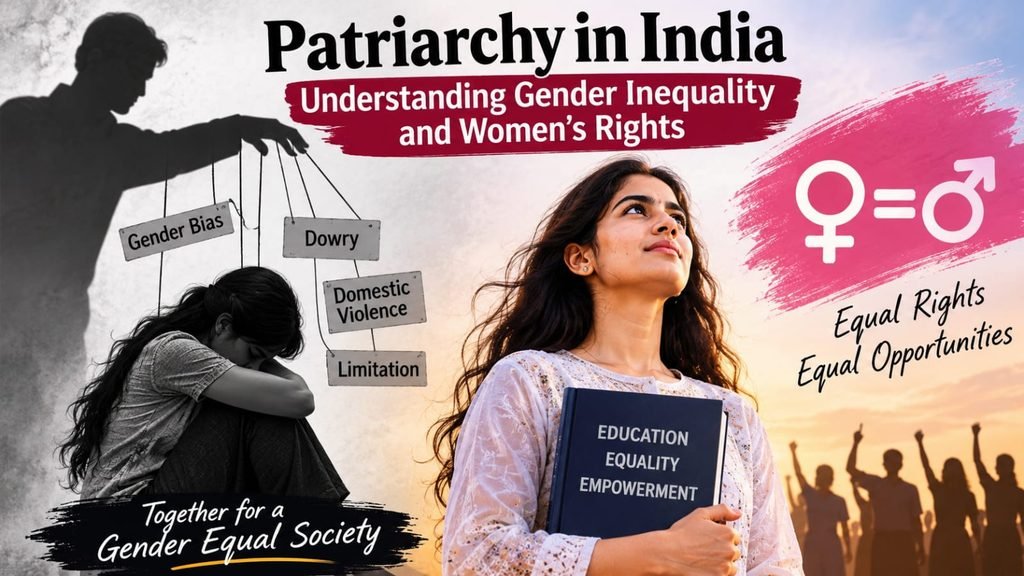
Patriarchy is a social system where men have traditionally held more power in the family and in society. It shapes customs, family life, education, work, and who gets to make decisions. In India, traditional gender roles have long defined what men and women are expected to do. In many communities, women still get fewer opportunities, face restrictions on their freedom, and experience discrimination. Education, awareness, and legal reforms have brought real change, but patriarchal practices continue in different forms. Understanding patriarchy helps us see its impact on women’s lives, recognize their legal rights, and understand why gender equality matters for a fair society.
Historical Background of Patriarchy in India
Patriarchy in India has been shaped by old traditions, social customs, and family structures. In many traditional families, men were seen as the main decision-makers and earners, while women were expected to look after the household.
With education, jobs, social movements, and new laws, women have had more opportunities over time. Still, some old beliefs and practices continue to affect daily life.
Today, women are active in education, business, politics, and many professions. But getting equal opportunities and equal respect is still a challenge in many communities. According to the latest UN report, women are still not able to achieve equal legal rights as men. To know more about it, read this article: UN Report 2026 Shocker
Major Forms of Patriarchy in Indian Society
In India, patriarchy shows up in daily life and affects how much freedom and choice women get.
- Family—In many homes, men still make the major decisions.
- Education—Girls in some families don’t get full support for higher education.
- Work—Women often get lower salaries and fewer promotions compared to men.
- Marriage—Dowry and traditional expectations add a burden on women.
- Social Life—Women’s freedom to choose, move, and live independently is still restricted in some communities.
Impact of Patriarchy on Women’s Lives
Patriarchy deeply affects women’s lives. It can limit their education, career growth, personal freedom, and social position. In many cases, women are not able to make decisions for themselves.
At home and at work, many women face unequal treatment. Old traditions and fixed expectations often stop them from getting equal chances and living independently.
This also affects their confidence, financial independence, and participation in public life. That is why it is important to encourage equality, mutual respect, and equal opportunities for all.
Dowry System and Gender Discrimination in India
Dowry is one of the major social issues linked to gender inequality in India. It means giving money, gifts, or property to the groom’s family during marriage.
This practice puts a financial burden on the bride’s family and, in many cases, leads to harassment and discrimination against women. Even though dowry is banned by law in India, it still exists in some communities.
Gender discrimination is not limited to marriage. It also affects women in education, jobs, healthcare, and family life. Both men and women deserve equal respect, opportunities, and rights.
To build a better society, we all need to work together to stop dowry and support gender equality. Also read: Dowry deaths in India
Women’s Rights and Legal Protection in India
In India, women have equal rights under the Constitution. These rights ensure that they can live with dignity, freedom, and equality. The government has also made several laws to protect women from discrimination, harassment, and violence.
Some important legal protections are:
- Article 14: Gives equal protection before the law.
- Article 15: Stops discrimination based on sex and other grounds.
- Article 16: Ensures equal chances for everyone in government jobs.
- Dowry Prohibition Act, 1961: Bans giving and taking dowry.
- Domestic Violence Act, 2005: Protects women who face violence at home.
It is important for women to know about these rights so that they can be aware of their protection and take legal help when needed.Also read- UN report 2026
Role of Education in Ending Patriarchy
Education is very important to end patriarchy and bring gender equality. When girls and women get education, they become aware of their rights, gain confidence, and become self-reliant.
Education also helps in changing old mindsets and teaches people to give equal respect to both men and women. An educated woman can take her own decisions, build a career, and play an active role in society.
That is why schools, colleges and families should promote equal education for boys and girls. Education is one of the best ways to build a fair and equal society.
Women’s Empowerment and Financial Independence
Women’s empowerment means giving women equal rights, respect and chances in every part of life. When a woman is financially independent, she can take her own decisions and live with more confidence.
If women get good education, job opportunities and equal salary, they become self-reliant. They not only support their families but also contribute to the growth of society.
Financial independence helps women depend less on others and live a life of dignity. That is why empowering women is very important to end patriarchy and bring real gender equality.
Role of Mahila Mukti Sanstha in Women’s Empowerment
Mahila Mukti Sanstha works for women’s empowerment, gender equality, and social awareness. The organization mainly focuses on improving the lives of women and adolescent girls through community work.
Its main activities include:
- Education: Spreading awareness among girls and women about the importance of education.
- Health Awareness: Giving information about women’s health,mensurational hygiene, sexual and reproductive health (SRHR), and well-being.
- Adolescent Programmes: Guiding adolescent girls through awareness and learning activities.
- Women’s Rights: Making women aware of their rights, equality, and legal support.
- Community Awareness: Running awareness programs to discuss social issues and gender discrimination.
- Women’s Empowerment: Helping women become confident, independent, and active in society.
With these efforts, Mahila Mukti Sanstha is working towards creating a more aware, empowered, and equal society. Read more about Mahila Mukti Sanstha through the official website- https://mahilamuktisanstha.com/
Conclusion
Patriarchy still affects many parts of Indian society. Gender discrimination, unequal opportunities, and old and orthodox gender roles often limit the freedom and growth of women.
To end patriarchy, we need education, awareness, equal opportunities, and respect for women’s rights. Women should get equal access to education, jobs, healthcare, and decision-making.
Organizations, communities, and every individual have a big role in promoting gender equality. If we all work together, we can build a society where every woman and girl lives with dignity, freedom, and equal opportunities.
FAQs
- What is patriarchy?
Patriarchy is a social system where men have more power and control in family, society, and important decisions. - Does patriarchy still exist in India?
Yes, it still exists in many places due to old traditions, gender bias, and unequal opportunities. - How does patriarchy affect women?
It restricts women’s freedom, education, job opportunities, and their role in decision-making. - How does women’s empowerment help society?
When women are empowered, they become confident and independent and contribute more to the social and economic growth of society. - What is patriarchy vs matriarchy? Patriarchy: A system where men hold most of the power in family, society and make the main decisions.
Matriarchy: A system where women hold main power and take main decisions in family and society.
Difference: Patriarchy is male-dominated, and matriarchy is female-dominated. Both indicate who has more power and authority in society. - What does “patriarchy” mean in a feminism article?
Patriarchy is a social system where men have more power and authority than women. It creates gender inequality and limits women’s rights, freedom, and opportunities. Feminism is against patriarchy. It demands equality for all genders and believes that everyone should get equal rights and respect. - Is patriarchy good or bad? From a feminist view, patriarchy is harmful, as it creates inequality where men get more power and opportunities than women. It limits women’s freedom, rights, and participation. A fair society should give equal rights and respect to all genders.
References and Further Reading
- India Code – https://www.indiacode.nic.in/
- National Commission for Women – https://www.ncw.gov.in/
- UN Women – https://www.unwomen.org/
- Ministry of Women and Child Development – https://wcd.gov.in/
- Also read about POCSO Act
“Patriarchy in India: Understanding Gender Inequality and women’s Rights”