

A growing LPG cylinder shortage in India, driven by global energy disruptions and supply chain challenges, could disproportionately affect women, especially in rural households that depend on clean cooking fuel.
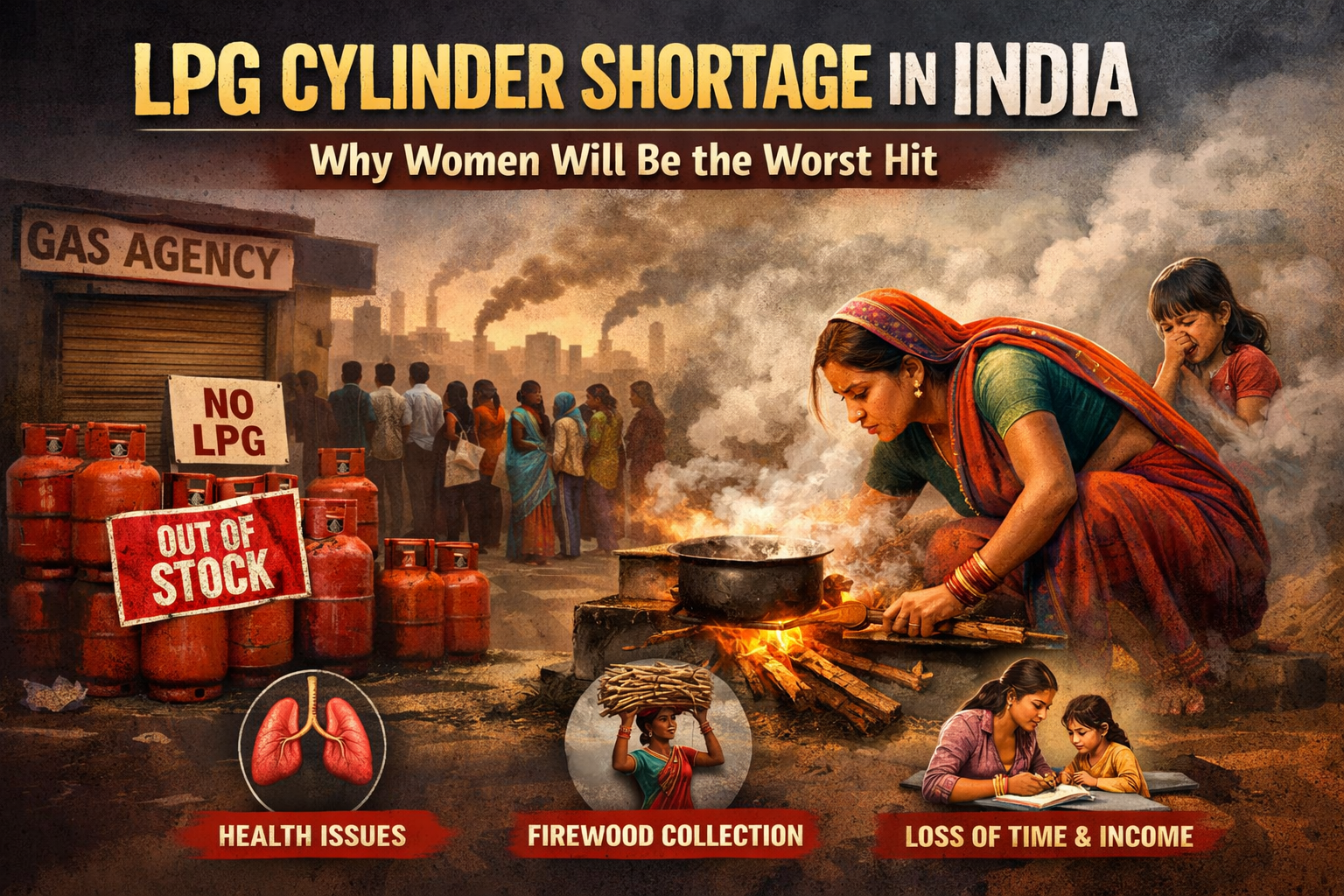
India Faces Emerging LPG Cylinder Shortage
India is witnessing growing concerns about a potential LPG (liquefied petroleum gas) cylinder shortage, with disruptions reported in several major cities. Restaurants, hostels, and institutions in cities like Mumbai, Bengaluru, Kolkata, and Delhi have already started feeling the impact as supplies become irregular.
The shortage is largely linked to global energy disruptions caused by tensions in West Asia, which have affected shipping routes and gas supplies to countries dependent on imports.
India imports a significant portion of its LPG requirements from the Middle East, making the country vulnerable to geopolitical disruptions.
As the crisis unfolds, the government has increased domestic production by around 25% and expanded sourcing to more countries to stabilise supply.
However, experts warn that the situation highlights deeper structural vulnerabilities in India’s cooking fuel system.
Signs of the Crisis Already Visible
Across the country, the LPG shortage has already started affecting everyday life.
- Some restaurants have temporarily shut down or changed menus due to gas shortages.
- Hotels and eateries in multiple cities warn that they may close operations if supplies don’t improve.
- Long queues have formed at gas agencies in some regions.
- Black-market LPG cylinders have reportedly been sold at inflated prices in cities like Hyderabad.
In some areas, businesses have even returned to wood-fired stoves, showing how quickly modern energy systems can revert when supply chains fail.
Why Women Could Be the Worst Affected
While the LPG shortage is widely discussed as an economic issue, its social impact—especially on women—is often overlooked.
1. Return to Traditional Cooking Fuels
For decades, women in rural India have cooked using firewood, cow dung, and charcoal, exposing them to harmful indoor air pollution.
The expansion of LPG connections under government schemes helped millions transition to clean cooking fuel.
However, supply shortages or rising costs could force families to return to traditional fuels, pushing women back into smoke-filled kitchens.
2. Increased Health Risks
Indoor air pollution from biomass fuels is associated with:
- respiratory diseases
- eye irritation
- chronic lung problems
Women and children are the most exposed because they spend more time near cooking areas.
A disruption in LPG supply therefore risks reversing years of progress in clean cooking initiatives.
3. More Time Burden on Women
If households revert to firewood or coal:
- women may need to collect firewood again, often walking long distances
- cooking time increases
- daily workloads expand
This reduces time available for education, employment, or community participation.
4. Economic Pressure on Poor Households
Even before the current shortage, refill rates of LPG cylinders among low-income households remained a challenge because of cost.
If prices rise further or supplies become irregular, many poor households may reduce LPG usage.
This again disproportionately affects women because they manage household cooking and energy needs.
Impact on Government Schemes for Women
India’s clean cooking transition has been driven by initiatives like:
- Pradhan Mantri Ujjwala Yojana (PMUY)
- LPG subsidy programs
- direct benefit transfers
These schemes aimed to provide clean, safe cooking fuel to millions of poor women.
But if the LPG supply chain becomes unstable, it could weaken the long-term sustainability of these programs.
Government Response to the Crisis
The government has taken several steps to prevent a full-scale crisis:
- increasing domestic LPG production
- importing gas from additional countries
- prioritising household LPG supply over commercial use
- monitoring black-market activity and hoarding
Authorities have also urged people not to panic or hoard cylinders.
Still, analysts say India needs larger strategic LPG reserves and diversified supply sources to reduce vulnerability to global shocks.
The Bigger Lesson: Energy Security Is Gender Security
The current LPG shortage highlights a crucial truth:
Energy security is not just an economic issue—it is a gender issue.
When cooking fuel becomes scarce or expensive:
- women’s health suffers
- household labour increases
- poverty deepens
Ensuring stable access to clean cooking energy is therefore essential for women’s empowerment, public health, and sustainable development.
The LPG cylinder shortage in India may currently appear as a supply chain issue driven by global energy tensions. But its deeper consequences could be felt inside millions of kitchens—particularly by women who rely on LPG for safe and efficient cooking.
If disruptions persist, policymakers will need to act quickly to protect both energy access and gender equality in the country.