

India’s education system is gradually evolving to become more flexible, inclusive, and digitally connected. One of the most significant initiatives in this direction is the Academic Bank of Credits (ABC), introduced under the National Education Policy 2020.
Recently, the Ministry of Education (India) highlighted an important milestone: more than 1.12 crore women in India now have a digital academic identity through the Academic Bank of Credits system. This development reflects how digital education is opening new doors for women who may have faced interruptions in their academic journeys.
For NGOs and civil society organisations working on women’s empowerment, this initiative represents a significant opportunity to promote lifelong learning and flexible education pathways for women across India.
Government Announcement on Academic Bank of Credits
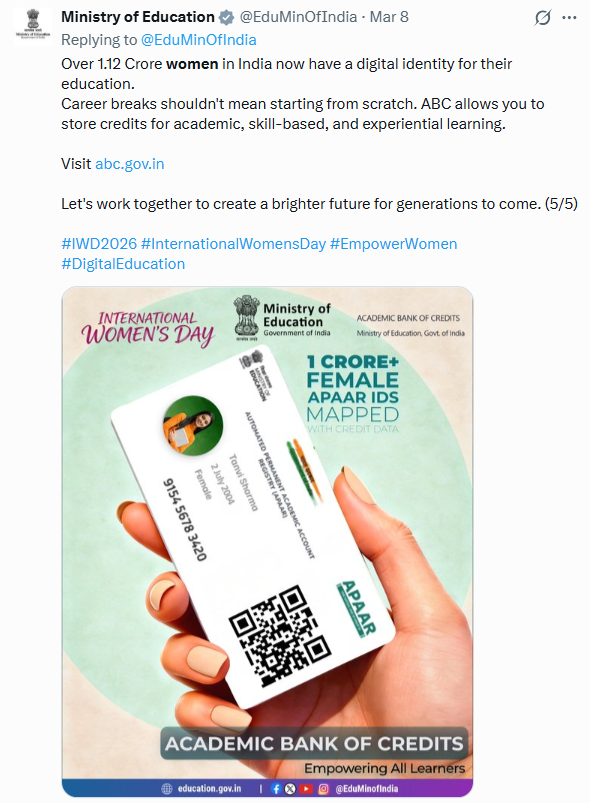
(Screenshot of the tweet by the Ministry of Education highlighting that over 1.12 crore women now have a digital identity for education through the Academic Bank of Credits platform.)
What is the Academic Bank of Credits (ABC)?
The Academic Bank of Credits is a digital platform where students can securely store the academic credits they earn during their education. Much like a financial bank stores money, this platform stores educational achievements and credits.
Through an ABC ID, students can:
- Store credits earned from universities and colleges
- Transfer credits between institutions
- Continue education after a break
- Track their academic progress digitally
The initiative aims to make India’s higher education system more flexible, student-centric, and accessible.
Why the Academic Bank of Credits Matters for Women
Women in India often face challenges that interrupt their educational journeys. Marriage, family responsibilities, childcare, or financial constraints sometimes force women to pause their studies
In traditional education systems, leaving a programme midway often meant losing academic progress and starting again from the beginning.
The ABC platform changes this reality by allowing women to preserve their academic credits digitally, enabling them to resume education whenever they are ready.
This means women can:
- Continue their studies after marriage
- Resume education after maternity breaks
- Balance work and higher education
- Complete degrees at their own pace
For organisations working in the field of women’s empowerment, such flexibility can significantly improve access to higher education for women.
Digital Education and the Expanding Learning Ecosystem
The Academic Bank of Credits is part of India’s larger digital education ecosystem, designed to make learning more accessible.
Several digital platforms complement this initiative, including:
- SWAYAM – offering free online courses from leading institutions
- DigiLocker – storing verified educational certificates and documents
- National Academic Depository – maintaining digital academic records
Together, these platforms support a technology-driven education framework in which learning can happen anytime, anywhere.
The Role of NGOs in Promoting ABC
While the policy framework is strong, awareness about such initiatives often remains limited at the grassroots level. Many women, especially in rural areas, may not be aware of the Academic Bank of Credits or how to register for an ABC ID.
NGOs and community organisations can play a vital role by:
- Conducting awareness campaigns about ABC
- Assisting women in creating their ABC IDs
- Encouraging women to continue or resume their education
- Promoting digital literacy and online learning opportunities
By supporting such initiatives, NGOs can help ensure that government policies translate into real educational opportunities for women.
The Academic Bank of Credits is a forward-looking initiative that recognises the need for flexible and inclusive education systems. With more than 1.12 crore women already part of the platform, the initiative demonstrates how digital tools can support women in continuing their education even after life interruptions.
For NGOs working toward gender equality and social development, this initiative presents an opportunity to bridge the gap between policy and people, ensuring that more women benefit from flexible education pathways.
As India moves toward a digital knowledge economy, initiatives like the Academic Bank of Credits can play a crucial role in ensuring that women have equal opportunities to learn, grow, and succeed.